

Several signals indicated that structured environmental reporting required immediate action:
Regulatory Pressure: CSRD and increasing EU Scope 2 & 3 requirements created demand for standardized, export-ready emissions reporting across regulated markets.
Enterprise Risk: CO₂ reporting surfaced in sales and renewal discussions as a requirement rather than a differentiator.
Churn Indicators: In certain cases, lack of environmental reporting capabilities contributed to customer dissatisfaction.
Operational Friction: Customers relied on manual spreadsheet workflows to extract emissions data, leading to inconsistency and audit risk.
Market Expectation Shift: Sustainability reporting became a baseline expectation in Norway and Sweden fleet segments.
These signals positioned CO₂ reporting as a compliance-critical capability rather than a feature enhancement.
Hypothesis
Users primarily need visual dashboards to understand emissions trends;
Users want to check data before downloading it;
Standard date-picker interactions would be sufficient;
Report discoverability within navigation was intuitive;
Users want precise calculations in the excel file;
Users want only business trips to be in the report;
Users want to see trips divided by month in report.
Actual Findings
Users prioritised structured, export-ready raw data over in-product visualisation;
Reports were often used as input for external ESG systems, mostly use excel format;
Accuracy, filtering, and export reliability mattered more than visual presentation;
Users worked in strict monthly, quarterly, and annual reporting cycles;
Trip type separation and fuel-type precision were critical for compliance accuracy and required clearer logic and visibility.
Based on regulatory requirements and usability findings, the solution focused on clarity, structure, and audit-readiness rather than visual enhancement
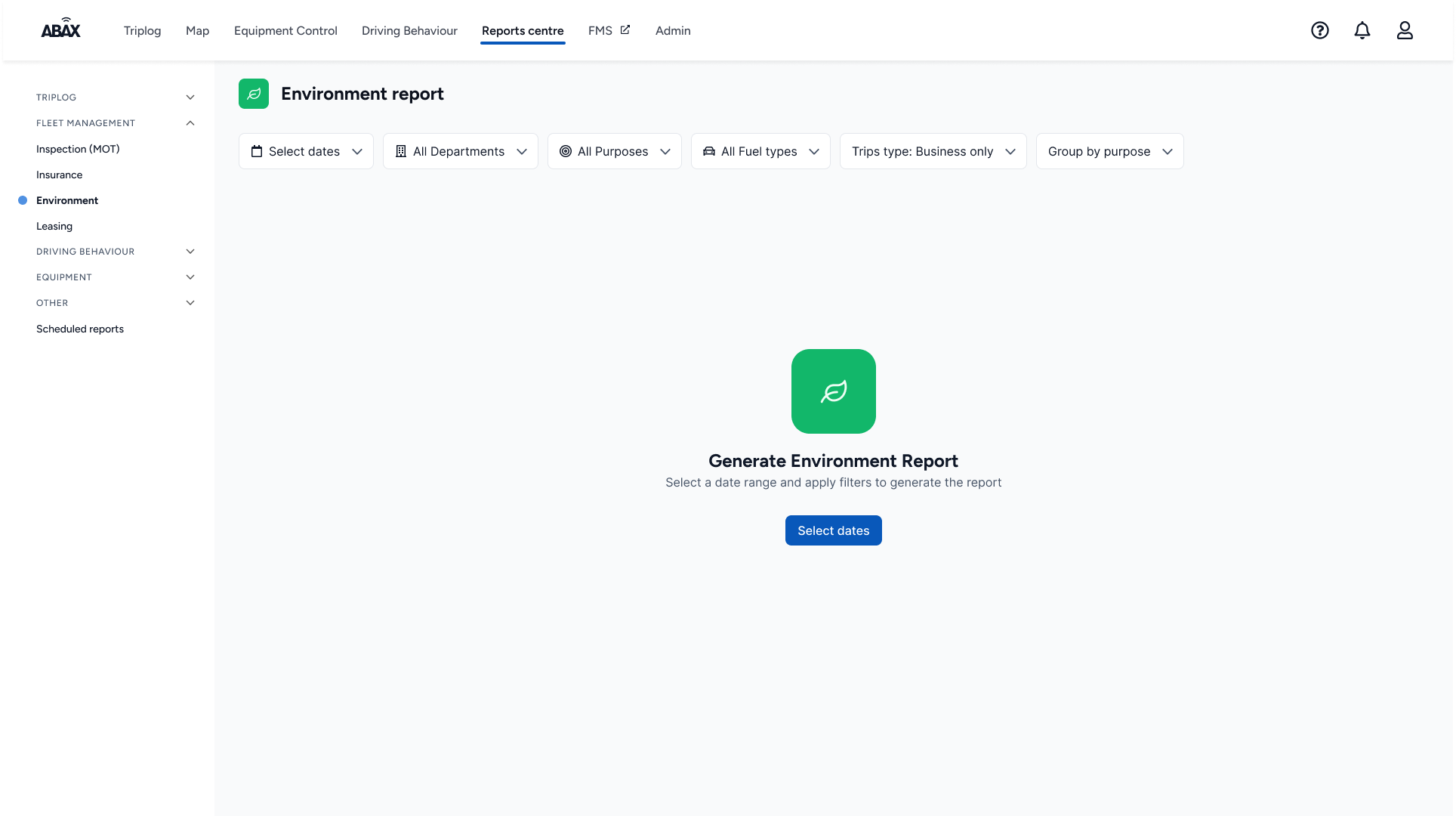
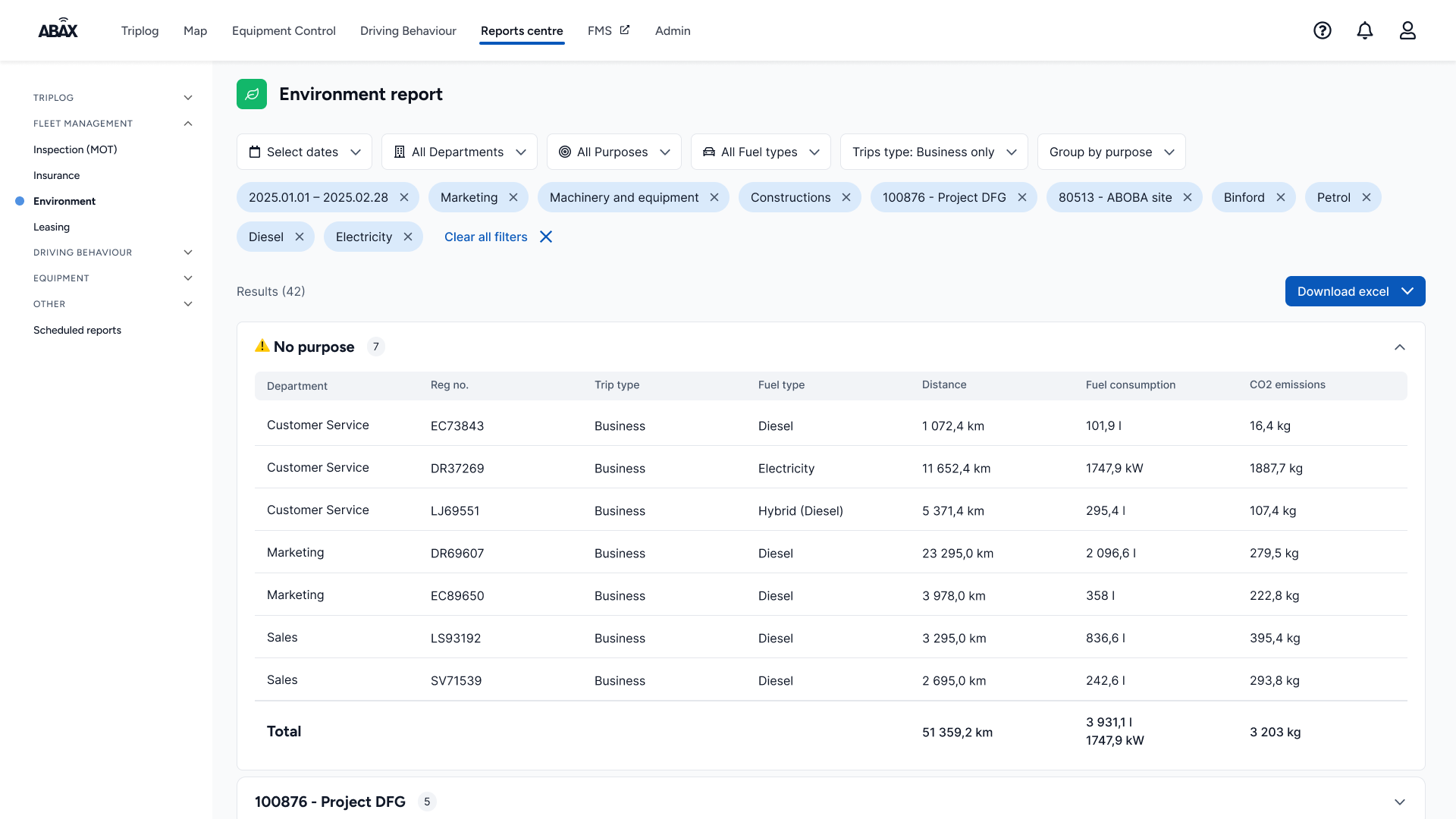
To align with compliance workflows and usability findings, the final solution focused on structure and export reliability:
Precise filtering by vehicle type, fuel type (diesel, hybrid, EV, HVO), project, and trip category
Monthly breakdown structure aligned with reporting cycles
Export-first interaction: prominent Excel download as primary action
Consolidated 3–4 separate reports into a single structured compliance workflow
Adopted by 1,000+ customers across regulated EU markets
Reduced reliance on fragmented spreadsheet-based data extraction
90% of users reported the workflow was “as expected” or easier (30 responses)
From compliance reporting → actionable sustainability insights
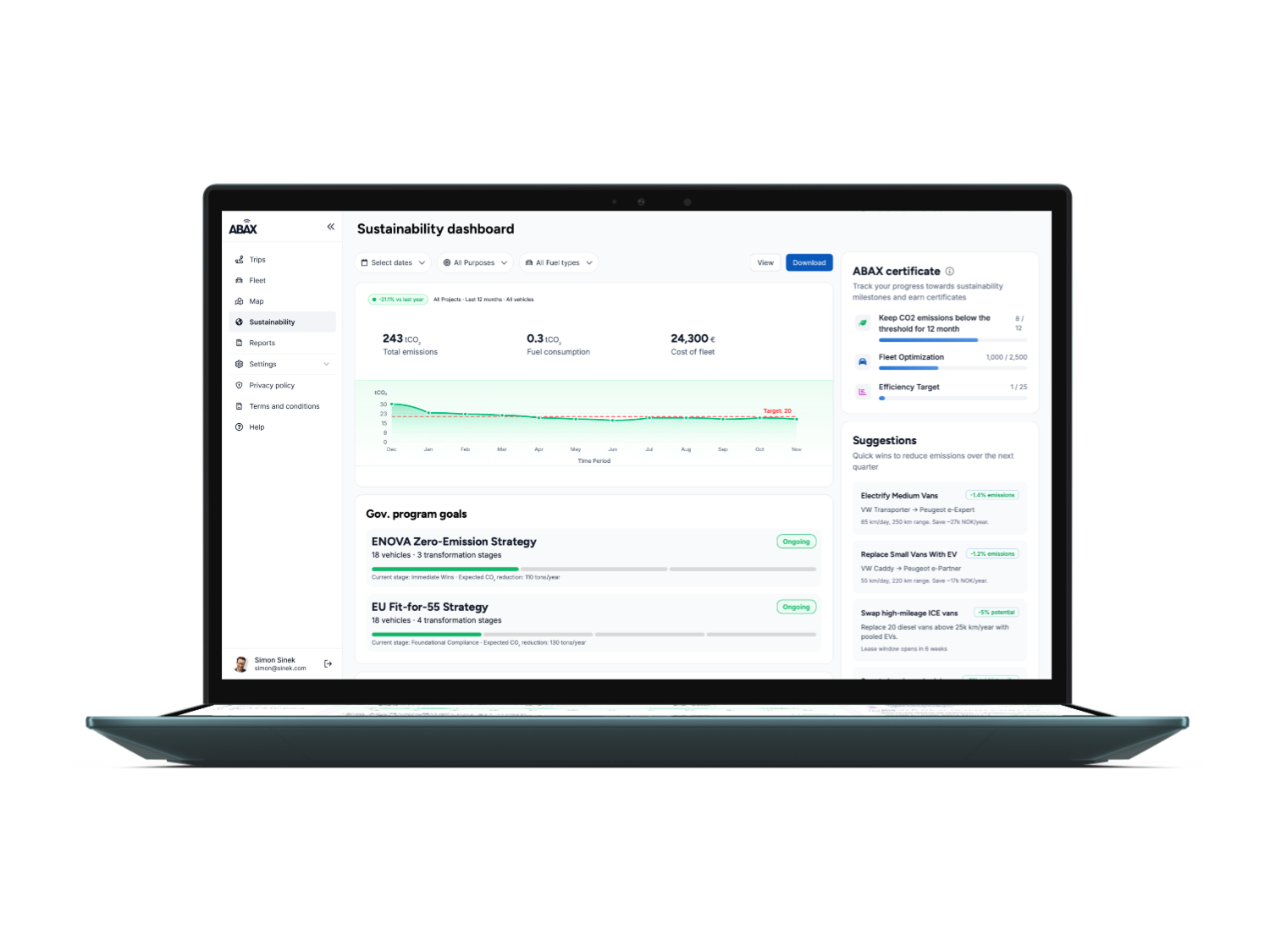
During an internal AI hackathon, I led a cross-functional team to explore how our Environmental Report could evolve beyond compliance into a decision-support system.
Seeing an opportunity to expand the product’s value, we reframed the report as a Sustainability Hub — transforming static regulatory output into actionable insights.
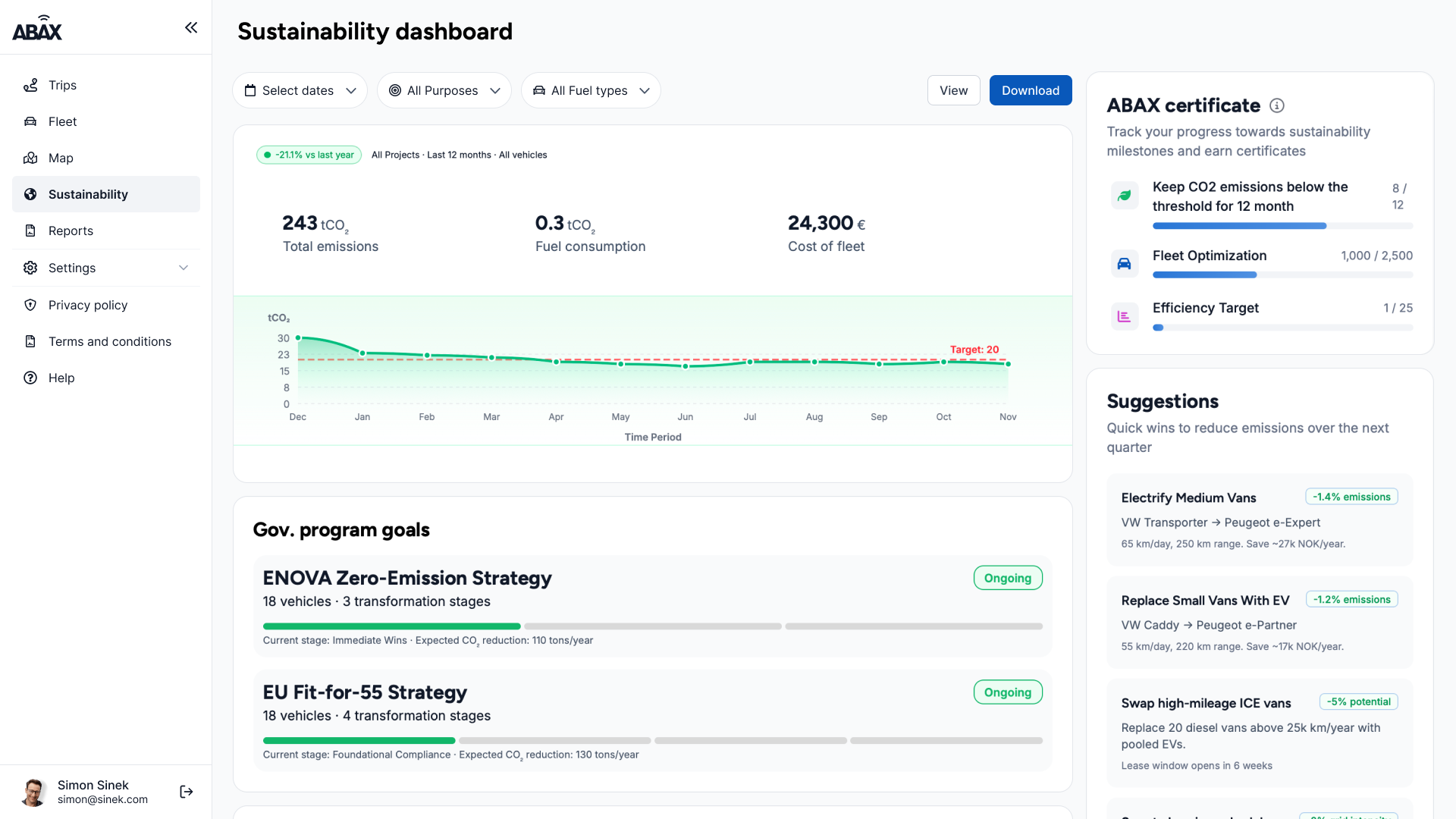
Fleet-level emission trends with target tracking
Alignment with government and EU sustainability programs
AI-assisted reduction suggestions with quantified impact
Cost and emissions transparency in a single decision-support view


